The 10-Minute Kitchen Reset: Quick Cleaning That Works
A spotless kitchen can feel like a constant battle, especially when time is limited. But research on habit formation and behavior shows that small, consistent actions are far more effective than occasional deep cleans.
A 10-minute kitchen reset is a practical, evidence-backed approach that helps prevent mess buildup, reduces stress, and keeps your space functional without overwhelming effort.
Why Quick Resets Work
Short, focused cleaning sessions are effective because they interrupt the cycle of accumulation. Studies on clutter and mental load have found that visible mess can increase stress and reduce focus. By resetting your kitchen daily—even briefly—you maintain a clean baseline that’s easier to manage.
Quick resets also lower the psychological barrier to starting. When a task feels manageable (just 10 minutes), you’re more likely to follow through. Over time, this builds a sustainable habit rather than a cycle of procrastination and deep-clean marathons.
The 10-Minute Routine
This routine is designed for efficiency, focusing only on tasks with the highest visual and hygienic impact.
Minute 1–3: Clear clutter
Put away items that don’t belong on the counters—mail, utensils, packaging. Visual clutter is the fastest way to make a kitchen feel messy, so clearing it creates an immediate sense of order.
Minute 4–6: Wipe surfaces
Use a multi-surface cleaner and a microfiber cloth to wipe countertops, stovetops, and any obvious spills. Research shows microfiber cloths are highly effective at removing bacteria and debris due to their fine fibers.
Minute 7–8: Sink + faucet reset
The sink is often the dirtiest area in the kitchen. Quickly scrub it with dish soap, rinse, and wipe down the faucet. This not only improves hygiene but also makes the entire kitchen look cleaner.
Minute 9–10: Final touch
Load or stack dishes, or do a quick sweep of the floor in high-traffic areas. These finishing steps reinforce the sense of completion and readiness for the next use.
Focus on High-Impact Areas
Not all cleaning tasks are equal. The key to a successful reset is prioritizing areas that visually and functionally define cleanliness:
Counters: Clear and wiped surfaces instantly signal order
Sink: A clean sink improves both hygiene and appearance
Stove: Removing grease and crumbs prevents buildup
High-touch spots: Handles, switches, and faucets harbor the most germs
Targeting these zones ensures that even a short effort produces noticeable results.
Tools That Make It Faster
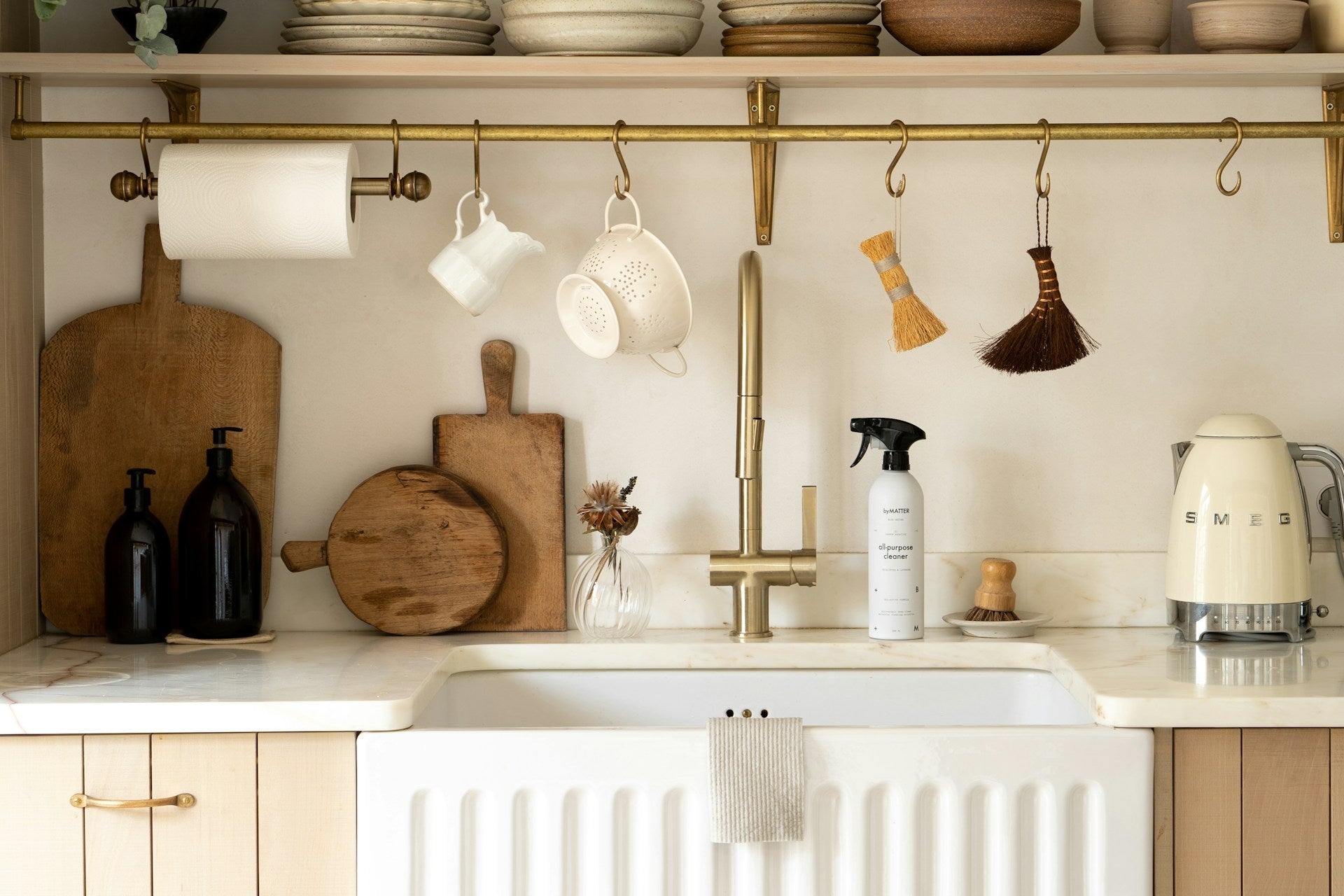
Efficiency depends on having the right tools within reach. Keep these essentials accessible:
Multi-surface cleaner spray: Ready to use and reduces the need for multiple products
Dish soap: Effective for grease and safe for most surfaces
Microfiber cloth: Proven to clean more effectively than standard cloths
Having a simple, ready-to-use setup minimizes friction and saves time during your reset.
Pro Tip
Start with what you see first — visible cleanliness makes the biggest difference.
Keep It Going
Consistency is what turns a quick reset into a lasting system. When your cleaning supplies are always stocked and easy to access, you’re more likely to maintain the habit. This aligns with behavioral research showing that reducing friction increases follow-through.
Consider building your reset into a daily or weekly routine—after dinner or before bed. Over time, this 10-minute habit prevents major buildup, making deep cleans faster and less frequent.
A clean kitchen isn’t about perfection—it’s about maintenance. With just 10 minutes a day, you can create a space that feels organized, hygienic, and ready for whatever comes next.