
Cleaning 101: How to Clean a Burnt Iron and Remove Stains
Noticing scorch marks or a burnt smell on your iron? Here’s how to clean it and keep it working like it should.
Burnt fabric and residue buildup can leave marks, create odors, and affect how smoothly your iron glides.
Why Should I Clean My Iron?

Over time, residue buildup can affect performance and transfer onto fabrics.
Residue buildup makes your iron less effective and can lead to smells, snagged materials, uneven steam production, burn marks on fabrics, and even fire risk.
How to Clean the Bottom of an Iron: 11 Methods

Before you start: Always unplug your iron and let it cool completely (unless a method says otherwise). Avoid using metal tools, which can scratch the soleplate.
Start by cleaning built-up residue from the steam holes of a cooled, unplugged iron. Use a toothpick, clean toothbrush, or cotton swab to wipe away gunk. Most importantly: Never use anything metal to clean an iron plate.
Pro Tip: Because polyester and microfiber melt at high heat, cover these fabrics with a natural fiber towel first.
1. Iron Over Salt & Parchment Paper

Turn your iron on a warm setting (without steam). Place a piece of newspaper or parchment paper on the ironing board and cover with a thin layer of salt. When the iron is heated, rub it quickly over the salt – in a circle – for one minute. Repeat, refreshing salt as necessary.
Unplug the iron, let it cool, and remove remnants with a damp microfiber cloth.
2. Scrub with Baking Soda

Create a thick paste of 2 parts baking soda to 1 part water. Cover the iron plate (avoid steam vents), scrub with a toothbrush, and wipe away with a damp microfiber cloth.
3. Rub on Vinegar & Baking Soda

Make a paste with equal parts vinegar and baking soda, dip a clean microfiber cloth in the paste, and rub in small circles over the soleplate. Wipe off with distilled water.
4. Wipe with Toothpaste

Rub a small amount of plain white toothpaste (not gel) onto scorch marks using a cotton bud. Wipe off with a damp microfiber cloth. If toothpaste gets into steam vents, run a steam cycle several times to flush it out.
5. Rub Iron with Paracetamol

Using tweezers, rub a white uncoated paracetamol tablet over the hot soleplate. It will dissolve into a gel, taking residue with it. Wipe on damp microfiber cloth.
6. Clean Out with Cotton Swabs

Dip cotton swabs in white vinegar and clean out clogged steam holes. Cotton swabs are perfect for this since they don’t scratch the plate.
7. Use a Magic Eraser

Get a magic eraser wet and run it on burn marks until they disappear. Works especially well on hard water spots.
8. Scrape with a Dull Knife and Ice Cubes

Unplug and cool the iron completely. Place it on ice cubes to harden any plastic residue. Scrape away with a dull plastic knife or wooden spatula.
9. Rub with Dryer Sheets

Set iron on its lowest setting and rub the plate with dryer sheets, replacing them as they heat up. Their mild abrasive qualities work well on light residue. Use only for light buildup and avoid prolonged heat exposure.
10. Wipe the Surface with Nail Polish Remover

Heat the iron, then wipe the surface with a cotton ball dipped in nail polish remover. The solution absorbs dirt quickly. Use sparingly and in a well-ventilated area.
11. Use the Right Everyday Surface Cleaner

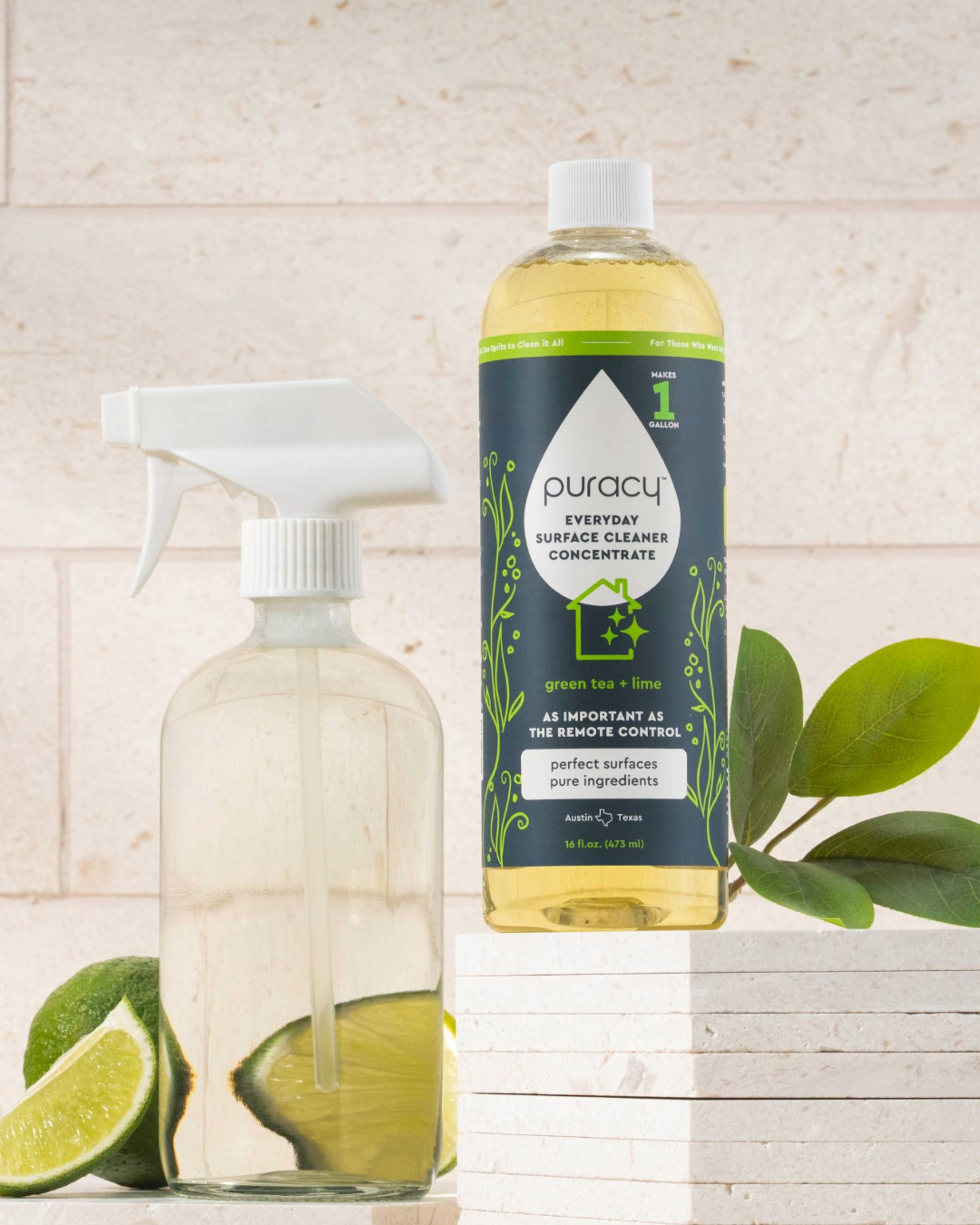
Start with a cool, unplugged iron and spray the soleplate with Puracy Everyday Surface Cleaner. Let the formula sit for 30–60 seconds, then scrub with a clean microfiber towel.
Pro tip: Our bio-powered, better-for-you all-purpose spray works beautifully on any non-porous surface — including your iron’s soleplate.
How to Clean an Iron Water Reservoir

Notice musty odors or see mildew in the water tank? There’s a simple solution for that:
1. Drain all remaining water from the reservoir.
2. Pour in a 1:1 distilled water and white vinegar solution.
3. Stand the iron up and select a high heat with steam setting. Let your iron work its magic until the liquid has almost completely evaporated.
4. Let your iron cool and drain the remaining liquid.
5. Fill the tank with distilled water, prop up the iron, and select the same high-heat steam. Run for 5-10 minutes.
Note: If your iron comes with a reservoir filter, soak it in the vinegar-water mixture. Thoroughly scrub with a dish brush, rinse, and dry before replacing.
Keep Your Iron Cleaner, Prevent Buildup

Frequent care is easy care – and will help prevent residue from sticking to the soleplate. These tried-and-true iron-cleaning methods will keep your iron looking new and your clothes looking their best:
1. Know Which Fabrics Can Be Ironed
Some types of fabric can’t handle high heat, others shouldn’t use steam. It's always recommended to read clothing tags to determine their specific ironing instructions. When in doubt – or if you're ironing a garment made of multiple fabrics – start with the lowest heat setting and test an interior seam.
2. Create a Barrier
Use a clean press cloth/thin cotton towel every time you iron. It acts an effective barrier between your iron’s soleplate and prevents gunk caused by synthetic fabrics.
3. Use Distilled Water
If your area has hard water, distilled water will help maintain your iron’s steam function and decrease mineral buildup along the soleplate.
Pro Tip: If you only iron occasionally, dump the water out to prevent mildew growth.
4. Wipe It Down
After every use, wipe your cooled soleplate with a damp microfiber cloth. This is especially true if you’re using starch.
Why Does My Iron Have Scorch Marks?

Residue from synthetic fabrics, starch, and basic grime tend to build up on iron soleplates (also known as the metal part that heats up). For people who have hard water, minerals can contribute to rust buildup on the iron plate and inside the steam holes.
This Is Much More Than an Iron Cleaner

Is there a non-porous surface you can’t use our Everyday Surface Cleaner on? We haven’t found it. There's a reason 100% money-back guarantee for all of our products: They work really, really well.